Tag Archives: book recommendation

Favorite Book Trilogies

IMG_1329 - Version 2


Book trilogies, for whatever reason, are a thing. For some reason, three seems to be the perfect number of books in so many series, and I feel like lately literally every movie, no matter how terrible, inevitably gets two sequels. But book trilogies also include some of my favorite books of all time, and if you really love a book, the promise of three connected stories is the only thing that can console you after it’s finished. So here are my absolute favorite book trilogies!


Annihilation (Southern Reach, #1)Authority (Southern Reach, #2)Acceptance (Southern Reach, #3)


The Southern Reach trilogy by Jeff Vandermeer – this trilogy helped me to realize how much I am drawn to weird fiction and creativity in writing, and inspire me to seek out more books in a similar vein. Vandermeer tells an eerie and consuming story that gains depth in each successive book.

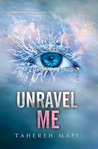
 

Shatter Me (Shatter Me, #1)Unravel Me (Shatter Me, #2)Ignite Me (Shatter Me, #3)


The Shatter Me trilogy by Tahereh Mafi – I have an undying appreciation for this trilogy, because it got me through the extreme stress of my National Board exams. At this point I’ve lost track of the number of times I’ve read it, because it lends itself extremely well to re-reads. And I love it, every time. I love the angst, the drama, the journal-esque style of the first book, and the villain-turned-love-interest. These are all elements that don’t always work for me in YA, but in the Shatter Me trilogy, it’s all perfect.


The Magicians (The Magicians, #1)The Magician King (The Magicians, #2)The Magician's Land (The Magicians, #3)


The Magicians trilogy by Lev Grossman – In these books, Grossman puts into words what fantasy readers have always felt: the longing to become a part of your favorite fantasy worlds, combined with the human traits that set us as real people apart from the heroic protagonists of fiction. I love this series because its characters are so flawed: they’re selfish, disillusioned, and paradoxically skeptical and full of hope; in short, they’re real. Because there’s only so long that you can trick yourself into thinking that you’d act like Harry Potter would in any given situation; the truth is that the majority of us would instead act like Quentin Coldwater.


Oryx and Crake (MaddAddam, #1)The Year of the Flood (MaddAddam, #2)MaddAddam (MaddAddam Trilogy #3)


The Maddaddam trilogy by Margaret Atwood – speaking of realistic, I still think that the futuristic society of Oryx and Crake is the most prescient and believable picture of society’s breakdown that I’ve ever read. Margaret Atwood is biting and creative, and her portrayal of society’s collapse is as intriguing as it is haunting.


The Hundred Thousand Kingdoms (Inheritance, #1)The Broken Kingdoms (Inheritance, #2)The Kingdom of Gods (Inheritance, #3)


The Inheritance trilogy by N.K. Jemisin – incredibly well-crafted fantasy world that changes completely over the course of the trilogy. My favorite by far was the first book, The Hundred Thousand Kingdoms, but this trilogy is a great example of one that can shift main characters and tone completely yet still remain coherent.
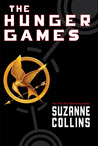
 

The Hunger Games (The Hunger Games, #1)Catching Fire (The Hunger Games, #2)Mockingjay (The Hunger Games, #3)


The Hunger Games trilogy by Suzanne Collins – I’ll admit, my enjoyment of the series did decrease slightly with each successive book, but it’s still one of my favorites. I love Katniss as a flawed, strong main character who is a hero because she’s forced into it, not born into it. I also think the series brings up a lot of interesting societal critiques, not the least of which is desensitization to violence through the media.

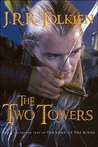
 

The Fellowship of the Ring (The Lord of the Rings, #1)The Two Towers (The Lord of the Rings, #2)The Return of the King (The Lord of the Rings, #3)


The Lord of the Rings trilogy by J.R.R. Tolkien – I’ve only ever read this as a single continuous story, and in that way it’s a trilogy that never felt like a trilogy to me. It’s epic and emotional, and masters the task of focusing on both the global and the personal.


What are your favorite book trilogies?

The Longest Books I’ve Ever Read

IMG_1308


I recently went to the bookstore (of course) and bought several new books (of course) (In my defense, I had a gift card). Among them was 1Q84, Haruki Murakami’s 1,157-page novel that I’ve had my eye on for years. So many things about this book intrigue me: the fantasy elements, the connection to George Orwell’s 1984, and particularly how long it is. I absolutely love the feeling of being deep in the middle of an extremely long book and never wanting it to end. It’s rare that a writer is talented enough to write a book that’s not only gigantic, but truly needs to be that gigantic in order to properly tell its story. I’m always searching for books like that.

Acquiring a gorgeous new giant book for my TBR pile made me start to think about the longest books I’ve ever read. To be clear, these are not necessarily the best books I’ve ever read or my favorites (although some of them are!)–they are just the most colossal.


Jonathan Strange & Mr Norrell


Jonathan Strange and Mr. Norrell by Susanna Clarke ( 849 pages) – Actually one of my favorite books. Two British magicians are bringing back magic during the Napoleonic Wars, and I could not be more on board. It’s fantasy, it’s alternate history, and it’s written in this gorgeous crafted old-fashioned-sounding prose. And there are footnotes! And Faerie! This is the type of book where you don’t notice length at all until you’re at the end and lament the fact that it’s over.


The Lord of the Rings


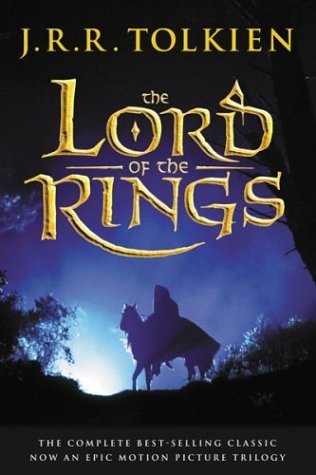
The Lord of the Rings by J.R.R. Tolkien (1,137 pages) – I’m counting this as one book because the edition I own is the all-in-one movie cover edition, and I’ve only ever read it as one continuous novel. I actually read through this twice during middle school, which was right before the Lord of the Rings films started being released. At the time, I was hesitant to start The Lord of the Rings because I was disappointed by The Hobbit (I thought it was too childish, and I really hated that there weren’t any female characters). But once Gandalf and the hobbits reached the Council of Elrond, I was completely on board–political machinations in fantasy realms hook me every time. Unlike a lot of readers, I didn’t mind the descriptive prose–Tolkien knows how to write, and the book deserved every one of its pages.


Winter's Tale


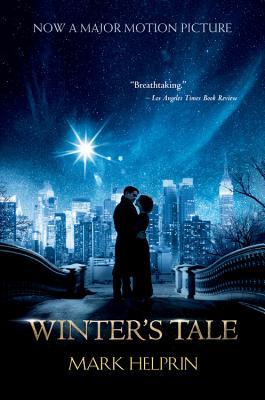
Winter’s Tale by Mark Helprin (768 pages) – For me, this would go in the “not worth it” section of extremely long books. It’s not that Winter’s Tale is a bad book, but it did not need to be even half as long as it was. I did not find any of the characters interesting, and kept wishing for more fantasy elements. All through the book, I felt like I was waiting for some sort of big payoff or climax which never arrived. I bought the movie edition thinking I’d read it before the film came out, and didn’t quite make it. It became sort of a joke with my friends, who noticed the fact that snow was persisting that year into March/April in Boston and attributed it to the fact that I was still reading a book called Winter’s Tale that I’d started in January. Well, I eventually finished it, and winter ended, so you’re welcome, I guess.


Atlas Shrugged


Atlas Shrugged by Ayn Rand (1,069 pages) – People tend to have very strong political opinions about Ayn Rand–libertarians love her, and most other people can’t stand her views–but my reading her books had nothing to do with politics and everything to do with the fact that she was my grandfather’s favorite writer; he passed away when I was a child and before I was able to get to know him as an adult. In high school, I decided to read all of her books to connect with that part of him, and I’m glad that I was able to do so. I don’t agree with her extreme political stances, but I do respect her as a storyteller–Atlas Shrugged is a gigantic feat of a book with a twisty plot that never lets go of your attention. I think more people need to let go of their prejudices against her politics and read her books purely for the storytelling.


Kushiel's Dart (Phèdre's Trilogy, #1)


Kushiel’s Dart by Jacqueline Carey (901 pages) – I really hate this book cover. The book is actually a very beautifully written fantasy that I devoured one summer. It’s set in an alternate medieval Europe, which is something I often have a problem with in fantasy because it can show a lack of creativity, but in this case Carey created a really interesting historical and religious context for her world. Also, Joscelin. How can you not love Joscelin?


The Wise Man's Fear (The Kingkiller Chronicle, #2)


The Name of the Wind (722 pages) and The Wise Man’s Fear (1,107 pages) by Patrick Rothfuss – Again, these books fall into the trap of pseudo-medieval-Europe fantasy, but I’ve really enjoyed them.


Harry Potter and the Order of the Phoenix (Harry Potter, #5)


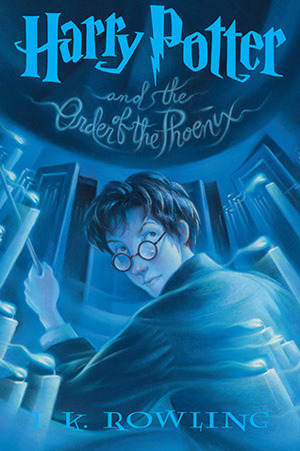
Harry Potter and the Order of the Phoenix by J.K. Rowling (870 pages) – I feel like I don’t talk enough about Harry Potter in this blog. My favorite book in the series is The Prisoner of Azkaban, but this is the longest, and I love them all so much. The thing about Harry Potter is that I feel like we’d all have been completely happy with 2,000-page volumes every year; I loved the amount of detail, humor, and heart in each new book.


The Stand


Edit: I can’t believe I forgot The Stand by Stephen King (1,167 pages)!


What are some of your favorite giant reads?

Beach Read Rec: Station Eleven IS Science Fiction

IMG_0852


Emily St. John Mandel’s Station Eleven has generated a lot of buzz–not only because it’s well-written, which it is, or because it was nominated for the National Book Award (and the PEN/Faulkner Award, and the Arthur C. Clarke Award), but also because of its author’s take on its genre. Back in October, she ignited controversy by tweeting “I actually don’t think of Station Eleven as sci-fi, but am fully prepared to concede that I may be alone in this….”

In and of itself, it’s a fairly innocuous tweet. It’s an author talking about her own work, and expressing an opinion while acknowledging the opinions of others. She followed it up by telling the Washington Post, “My only objection to these categories is that when you have a book like mine that doesn’t fit neatly into any category, there’s a real risk that readers who only read ‘literary fiction’ won’t pick it up because they think they couldn’t possibly like sci-fi, while sci-fi readers will pick up the book based on the sci-fi categorization, and then be disappointed because the book isn’t sci-fi enough.”

My problem is this: when an author says that their work is “literary fiction,” what they really tend to mean is that it’s well-written. The idea that something can’t be science fiction because it’s “literary,” then, doesn’t make sense to me, because that would mean that science fiction itself is inherently not literary; that it occupies a rung below realistic fiction in terms of quality. And not only is that inaccurate, but it’s offensive to science fiction writers and readers alike. It minimizes the profound works of science fiction writers like Octavia Butler and Ursula LeGuin, and it alienates readers who are drawn towards science fiction concepts with complex characters and intricate plots. Lately, so many authors are working to push genre boundaries and create transcendent, well-written works that are unique in story and technique

This being said, I do think that Station Eleven would make a great unconventional beach read. The format of several intertwining stories keeps the action fresh if you’re reading for long periods of time–to summarize briefly, the story revolves around three main characters: Arthur, a Hollywood star who dies of a heart attack while performing King Lear on the eve of a flu pandemic; Jeevan, a paparazzi-turned-paramedic who attempts to resuscitate him; and Kirsten, a former child actress who grows up traveling with a Shakespeare company in post-flu America. There are sequences that take place before, during, and after the outbreak of the Georgia flu, which originates in Russia but soon spreads globally to decimate the global population and create a new world made up of small, isolated communities. The post-flu sections with Kirsten were some of my favorites: the writing is dreamlike and the terrain, and action, feels somewhat surreal. I also loved the plot thread describing where the novel’s title originates from: that of a graphic novel called Station Eleven depicting life on a planet-sized space station far from Earth. I found the reading experience to be itself both isolating and surreal, and in that way very, very beautiful. My only criticisms would be that I didn’t feel that Kirsten’s character was explored in the depth that it could have been, and I honestly think that the book could have been significantly longer and still retained its impact.

Overall, it was at least an 8 out of 10 for me. And I maintain that it IS science fiction–science fiction that’s well-written. Which is exactly how I like my science fiction.